Bird Seed Types Explained
The seed you choose shapes which birds visit and how much waste ends up on the ground. This guide explains common backyard bird foods in plain language, which birds generally use them, and how to store them so they stay fresh.
Black oil sunflower seed
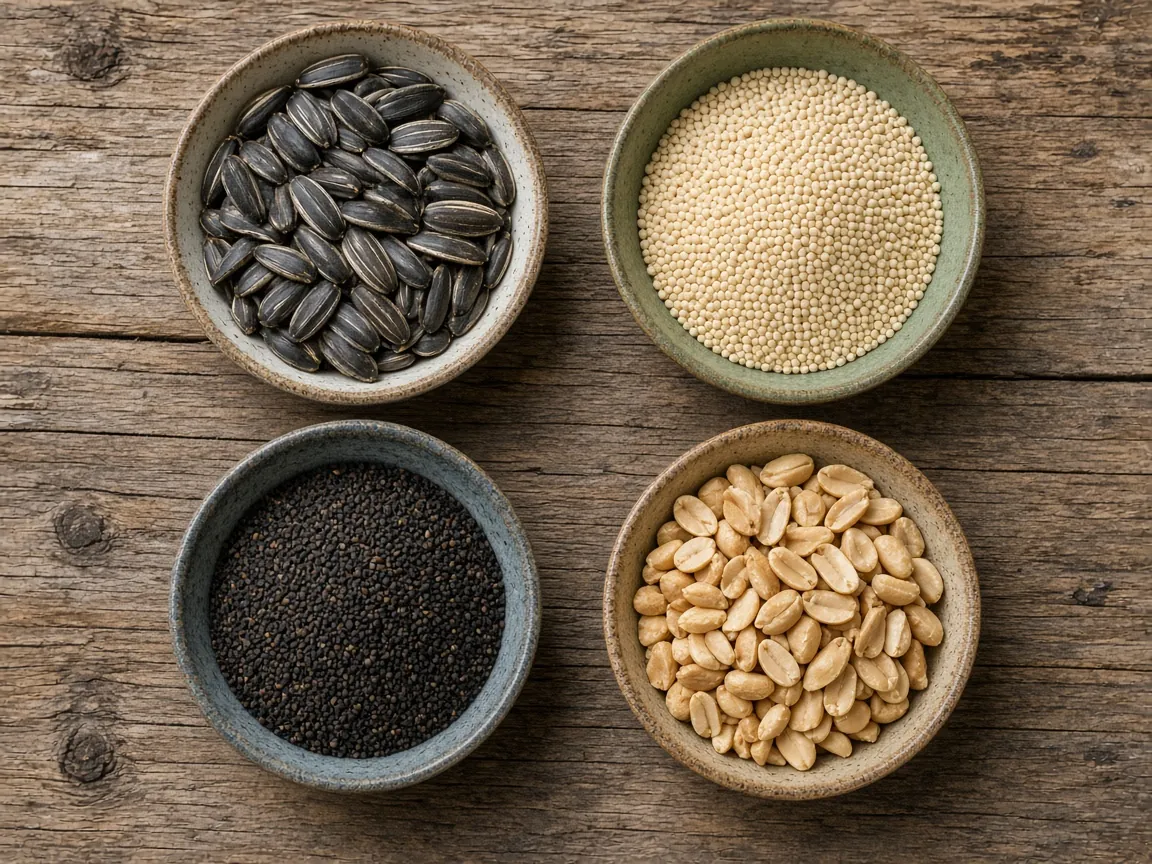
If you only offer one food, black oil sunflower seed is the one most backyard birding resources suggest. The thin shells are easy for many small birds to crack, and the seeds are high in fat.
- Often eaten by: cardinals, chickadees, titmice, nuthatches, finches, jays and grosbeaks.
- Feeder types: tube, hopper and platform.
- Note: shells pile up below feeders. Hulled sunflower ("hearts" or "chips") leaves less mess but spoils faster in wet weather.
Safflower seed
A white, slightly bitter seed.
- Often eaten by: cardinals, grosbeaks, chickadees, titmice and doves.
- Why people use it: some squirrels, grackles and starlings show less interest in it. Results vary by yard, so treat that as a possibility rather than a promise.
Nyjer (thistle) seed
A tiny, black, oily seed often sold as "thistle," although it does not come from North American thistles.
- Often eaten by: American goldfinches, pine siskins and other small finches.
- Feeder types: fine-mesh or small-port finch feeders.
- Note: nyjer goes stale and can mold if it gets wet, so buy smaller amounts and keep it dry.
White proso millet
Small, round, pale seeds.
- Often eaten by: ground-feeding birds such as juncos, many native sparrows, doves and towhees.
- Feeder types: low platform feeders or scattered in small amounts.
- Caution: millet is also popular with house sparrows and cowbirds in many areas. If those species dominate, reduce or skip millet.
Peanuts
Offer plain, unsalted, unflavored peanuts, either shelled or in the shell.
- Often eaten by: jays, woodpeckers, nuthatches, chickadees and titmice.
- Feeder types: mesh peanut feeders or platforms.
- Caution: peanuts can develop dangerous molds if they get damp. Offer small amounts, keep them dry, and discard any that look or smell off.
Cracked corn
Cheap and popular with doves, jays, sparrows and many other birds, as well as squirrels and other wildlife. Offer sparingly in small amounts on a clean platform, because it spoils quickly when wet and can attract larger animals.
Suet
Animal fat, often mixed with seeds or other ingredients and sold in cakes. Woodpeckers, nuthatches, chickadees and wrens often visit suet. Raw suet can go rancid and melt in warm weather, which can foul feathers, so many people offer it mainly in cooler months.
What about mixes?
Inexpensive seed mixes often contain fillers such as red milo, wheat and oats that many backyard birds in the East toss aside, creating waste on the ground. If you use a mix, check the ingredient list and look for mixes built around sunflower, millet and similar seeds. Some western ground-feeding birds do eat milo, so local experience matters.
Foods to avoid
- Bread and other baked goods, which offer little nutrition.
- Salted, seasoned or flavored nuts and snacks.
- Moldy, clumped or musty-smelling seed.
- Honey or artificial sweeteners in hummingbird feeders; use plain white sugar and water only.
Storing seed safely
- Keep seed in sealed metal or hard plastic containers to keep out moisture and rodents.
- Store in a cool, dry place out of direct sun.
- Buy amounts you will use within several weeks, especially in humid weather.
- Throw out seed that is clumped, moldy or full of insects.
Common mistakes
- Buying a large bag of cheap mix and watching most of it hit the ground.
- Filling feeders to the top before rainy stretches.
- Ignoring the pile of shells and old seed below the feeder.
- Assuming a special seed will bring rare birds. Food mainly supports species already in your area.
Seed checklist
- Black oil sunflower as a base
- Nyjer only in a finch feeder, kept dry
- Millet in small amounts for ground feeders
- Plain, unsalted peanuts
- Sealed, dry storage
- Regular cleanup under feeders
Pair the right food with the right style using our feeder types guide, and keep everything clean with our hygiene guide.
Questions beginners ask
Is expensive seed always better?
Not necessarily. What matters is that the seed is fresh, dry and something your local birds eat. A plain bag of black oil sunflower seed can outperform a cheap mix full of filler.
Why is there a pile of seed under my feeder?
Birds sort through seed, drop hulls, and toss foods they do not want. Some ground-feeding birds will eat dropped seed, but large piles can mold and attract rodents. Rake regularly and adjust what you offer.
Can I grow my own bird food?
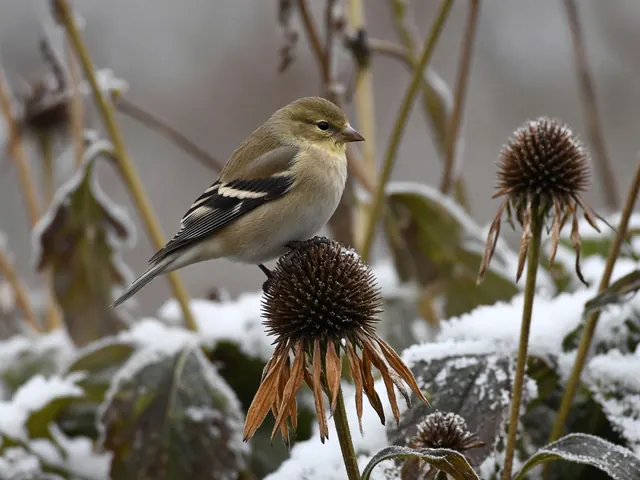
Yes, in a sense. Native seed-producing plants like coneflowers and sunflowers feed birds naturally. See our native plants guide for ideas suited to your region.
Is it okay to feed birds kitchen scraps?
Most kitchen scraps are not good bird food. Bread, salty foods and cooked leftovers offer little nutrition or can harm birds. Plain seeds, suet and native plants are better choices.
Helpful public resources
Links go to independent organizations. BackyardBirdAtlas is not affiliated with them.
Educational information only. Bird ranges and timing vary by region. For uncertain identifications, check a trusted field guide or ask local birding experts. For injured or sick birds, contact a licensed wildlife rehabilitator. See our disclaimer.