American Goldfinch Through the Seasons
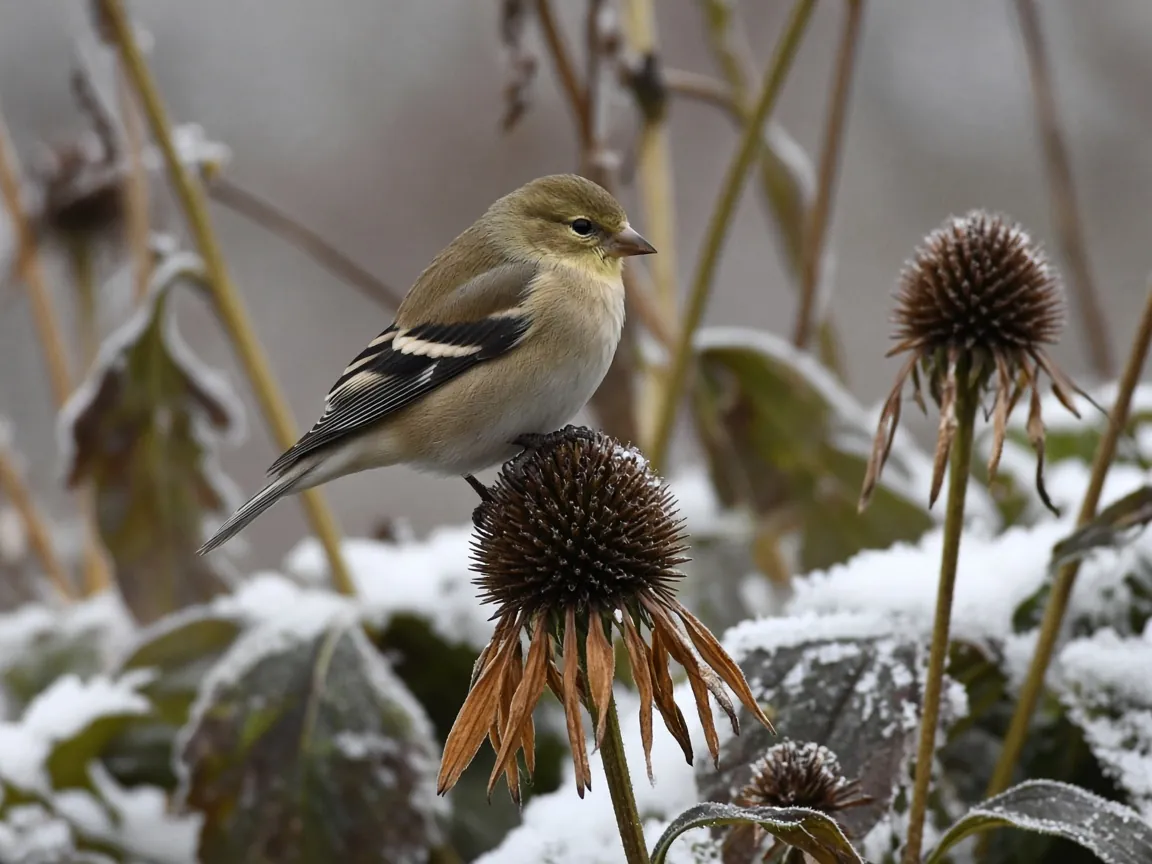
American goldfinches can look like two different birds depending on the month. Bright lemon-yellow in summer, they turn soft olive-brown in winter. Following one species through the year is a great way for beginners to learn how seasons change what we see.
Quick identification
- Size: smaller than a sparrow.
- Shape: a small, conical, pinkish to orange bill; a short, notched tail.
- Breeding male (spring and summer): bright yellow body, black cap on the forehead, black wings with white bars.
- Breeding female: duller yellow below, olive above, no black cap.
- Winter adults: drab olive-brown or buff with black wings and pale wing bars; males often keep a hint of yellow at the face and shoulder.
Where they live
American goldfinches occur across much of the United States. In many northern areas they are present year-round, while in parts of the South they are more common in winter. Their movements can vary from year to year depending on food. Check a range map for your area.
In the Southwest and along the Pacific Coast, the lesser goldfinch and Lawrence's goldfinch also occur and can be confused with American goldfinches.
Spring: the color change
Goldfinches go through two molts a year. In late winter and spring, they molt body feathers, and males gradually turn from olive-brown to bright yellow. Patchy, half-yellow males at feeders in March or April are simply mid-molt. Females also become brighter, though less dramatically.
Summer: late nesters
Unlike many songbirds that nest in spring, American goldfinches usually nest later in summer, often in July and August in much of their range. This timing matches when many plants, such as thistles and other members of the aster family, produce seeds and soft plant down that goldfinches use to line nests. Their diet is mainly seeds, even for nestlings, which is unusual among songbirds.
Summer goldfinches often visit coneflowers, sunflowers and other seed-producing flowers. Leaving seed heads on plants gives them natural food.
Fall: changing again
After nesting, goldfinches molt again, replacing all their feathers. By late fall, the bright yellow is gone, and many people wonder where "their" goldfinches went. In many cases, the birds are still there, just in their drab winter plumage. The dark wings with pale bars and the finch bill are good clues.
Winter: flocks and feeders
In winter, goldfinches often travel in flocks, sometimes mixed with pine siskins or other finches. They readily visit feeders with nyjer and sunflower seed, especially hulled sunflower. Their flight is a distinctive bouncing, up-and-down pattern, often with a "po-ta-to-chip" call given in flight.
Supporting goldfinches
- Plant native seed-producing flowers such as coneflowers, asters and native sunflowers, appropriate for your region.
- Leave seed heads standing in fall and winter.
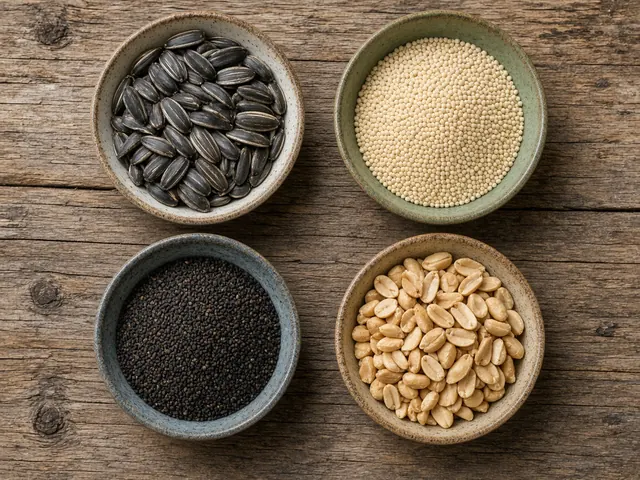
- Offer nyjer or sunflower in a clean finch or tube feeder. See bird seed types.
- Keep nyjer dry and fresh; goldfinches often ignore stale seed.
- Clean feeders regularly; see feeder hygiene.
Look-alikes
- Yellow warbler: also yellow, but with a thin pointed bill and no black cap or black wings.
- Pine siskin: streaky brown with yellow flashes in the wings, often in goldfinch flocks.
- Lesser goldfinch: western; males have dark backs and smaller bodies.
- Winter goldfinch vs. sparrow: sparrows usually show streaks; winter goldfinches are plain with bold wing bars.
Common mistakes
- Thinking goldfinches "left" in fall when they only changed color.
- Calling a molting male "sick" because it looks patchy.
- Offering stale or wet nyjer and assuming goldfinches dislike feeders.
- Deadheading every flower before seeds form.
Seasonal goldfinch checklist
- Small finch with conical bill and notched tail
- Black wings with pale bars in every season
- Bright yellow males in summer
- Olive-brown birds in winter
- Bouncing flight and "po-ta-to-chip" call
- Range checked for lesser or Lawrence's goldfinch
See more seasonal changes in winter backyard birdwatching, or test your observations with the ID Helper.
Questions beginners ask
Why do goldfinches ignore my nyjer feeder?
Stale or damp nyjer is a common reason. Natural food can also draw them away in summer and fall. Try fresh seed in a clean feeder, and be patient.
Are goldfinches the same as canaries?
No. American goldfinches are native wild finches. Domestic canaries are a different species descended from wild canaries of the Canary Islands, Azores and Madeira.
Do goldfinches migrate?
Some do and some do not, and movements vary by year and region. In many areas, birds seen in winter may not be the same individuals that nested there in summer.
How can I tell winter males from females?
Winter males often show a bit more yellow at the throat and darker black wings with brighter yellow shoulder patches, but the difference can be subtle.
Helpful public resources
Links go to independent organizations. BackyardBirdAtlas is not affiliated with them.
Educational information only. Bird ranges and timing vary by region. For uncertain identifications, check a trusted field guide or ask local birding experts. For injured or sick birds, contact a licensed wildlife rehabilitator. See our disclaimer.