Winter Backyard Birdwatching
Winter can be one of the best times to start birdwatching. Leaves are down, many birds gather in flocks, and feeders and water bring activity close to the window. Here is how to enjoy winter birds and support them responsibly.
Why winter is great for beginners
- Better visibility: bare branches make birds easier to spot.
- Fewer species: in many areas, there are fewer species around than in spring migration, which makes learning easier.
- Predictable visitors: the same birds often return to feeders and water day after day.
- Mixed flocks: chickadees, titmice, nuthatches, kinglets and downy woodpeckers often travel together, giving you several species at once.
Common winter backyard birds
Which birds you see depends greatly on region. In much of the United States, common winter visitors include:
- Northern cardinal: bright red against snow. See our cardinal guide.
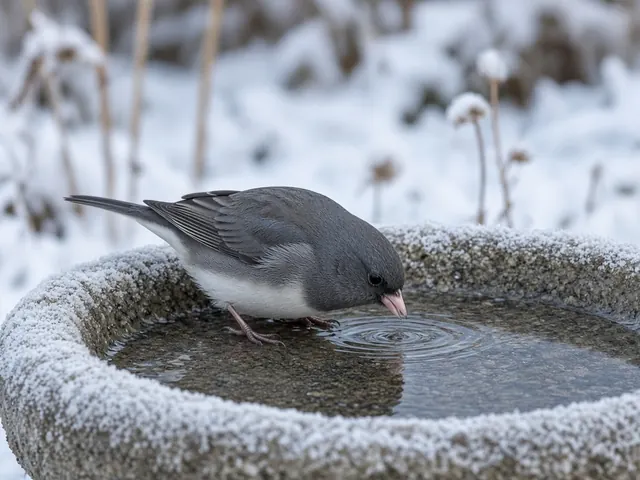
- Dark-eyed junco: slate-gray above, white belly, pale pink bill, white outer tail feathers. Juncos are often called "snowbirds" and in many areas arrive in fall and leave in spring.
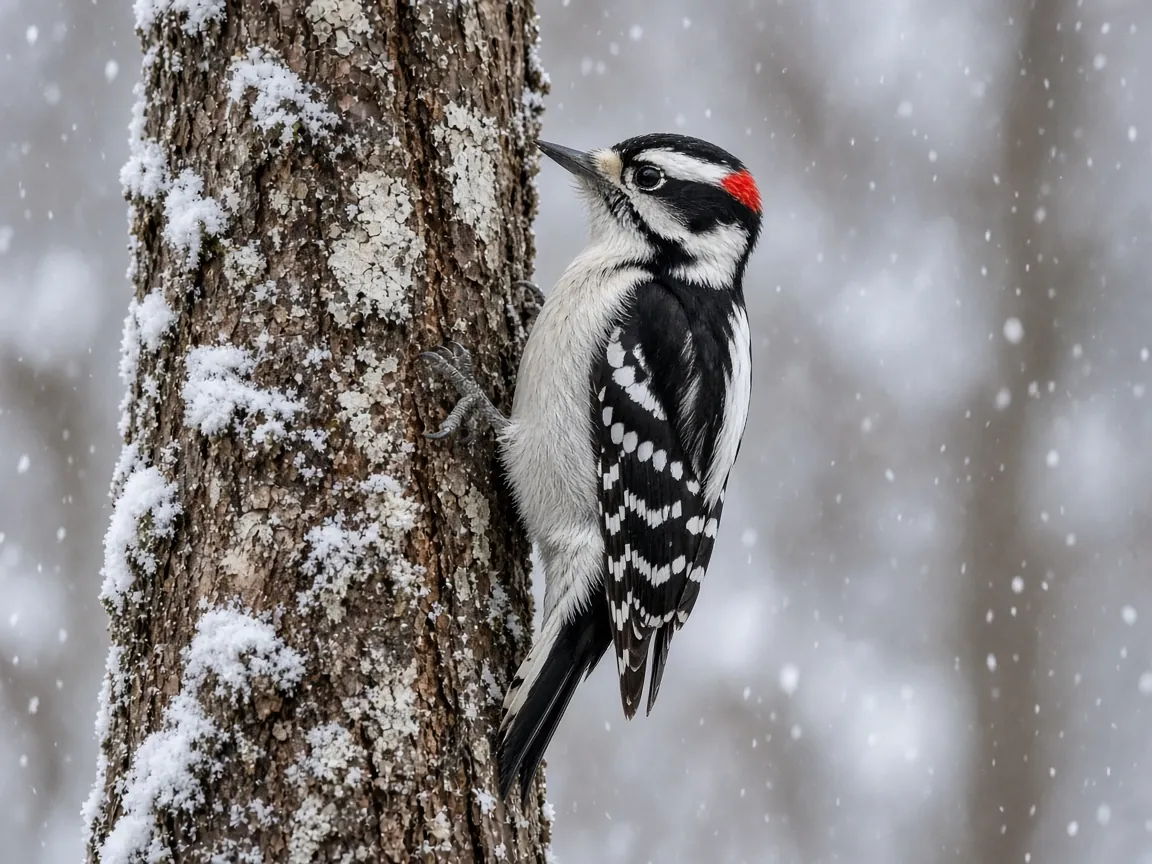
- Downy woodpecker: small black-and-white woodpecker; males show a small red patch on the back of the head.
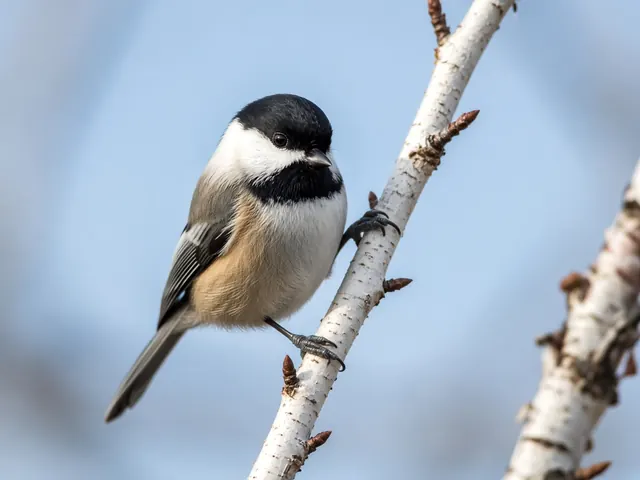
- Chickadees and tufted titmice: busy, acrobatic regulars. See our chickadee guide.
- White-breasted nuthatch: creeps headfirst down trunks.
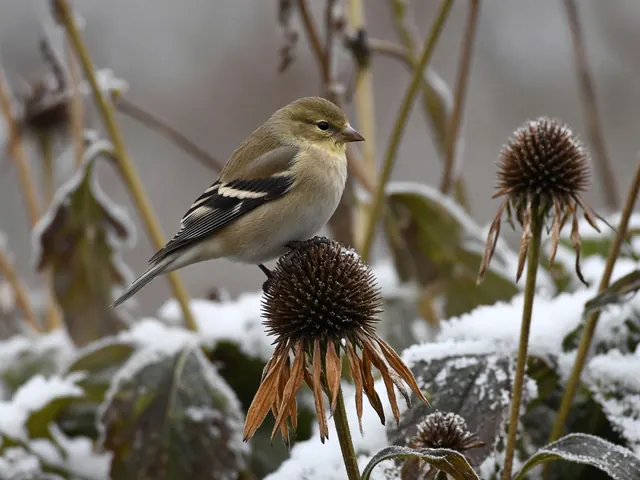
- American goldfinch: in drab winter plumage. See goldfinches through the seasons.
- Blue jay: loud and conspicuous. See our blue jay guide.
Some winters bring "irruptions" of northern finches such as pine siskins, redpolls or evening grosbeaks moving south in search of food. These are unpredictable and depend on natural seed crops, so enjoy them if they come rather than expecting them.
Downy or hairy woodpecker?
Downy and hairy woodpeckers look very similar. Key differences:
- Bill length: the downy's bill is short, much shorter than its head; the hairy's bill is nearly as long as its head.
- Size: downy is sparrow-to-small-robin sized; hairy is closer to robin-sized.
- Outer tail feathers: downies often show small black spots on white outer tail feathers; hairies usually show clean white.
Bill-to-head ratio is often the most practical clue at a feeder.
How birds cope with cold
Small birds have remarkable strategies: fluffing feathers to trap warm air, shivering to generate heat, roosting together in cavities or dense evergreens, and, in some species like chickadees, lowering body temperature overnight to save energy. Seeing a puffed-up bird on a cold day is usually normal and not a sign of illness on its own.
Supporting winter birds
- Food: black oil sunflower, suet in cold weather, and millet for ground feeders. See seed types.
- Water: open water can be scarce. See winter water.
- Shelter: evergreens, brush piles and dense shrubs provide wind protection.
- Clean feeders: flocks increase disease risk; keep up hygiene. See feeder hygiene.
- Clear snow: brush snow off platforms and offer some food in sheltered spots after storms.
Join community science
Winter is a great time for community science. Programs like Project FeederWatch (Cornell Lab of Ornithology and Birds Canada) run from November through April, and the Great Backyard Bird Count, led by the Cornell Lab, National Audubon Society and Birds Canada, takes place each February. Both welcome beginners, and your counts help scientists track bird populations.
Winter observation tips
- Watch from a warm window; most activity is in the morning.
- Keep binoculars and a notebook by the window.
- Record species, count, time and weather.
- Note changes after storms or cold snaps.
- Compare with last winter's notes.
Common mistakes
- Assuming a puffed-up bird is sick.
- Letting feeders run empty during storms after birds have come to rely on them.
- Forgetting about water.
- Expecting rare irruptive species every winter.
Winter birding checklist
- Binoculars and notebook by the window
- Feeders clean and stocked through storms
- Open water available
- Shelter: evergreens or brush pile
- Downy vs. hairy: compare bill to head
- Consider Project FeederWatch or the Great Backyard Bird Count
Questions beginners ask
When do juncos arrive?
In many parts of the United States, juncos arrive in fall, often around October, and leave in spring. Timing varies by latitude and year, and in some mountain and northern areas they are present year-round.
Is it okay to feed birds during snowstorms?
Yes. Keeping feeders stocked and cleared of snow can help birds during harsh weather. Offer food in sheltered spots and keep feeders clean.
Why are there fewer birds at my feeder some winters?
Natural food supplies, weather, predators like hawks, and regional movements all play a role. A quiet winter does not necessarily signal a problem.
What should I record for community science?
Most programs ask for species, maximum count seen at one time, date, time and location. Follow each program's specific instructions.
Helpful public resources
- Project FeederWatch — Cornell Lab of Ornithology and Birds Canada
- Great Backyard Bird Count
- Feeding Birds (feeders, foods, cleaning, placement) — Project FeederWatch
Links go to independent organizations. BackyardBirdAtlas is not affiliated with them.
Educational information only. Bird ranges and timing vary by region. For uncertain identifications, check a trusted field guide or ask local birding experts. For injured or sick birds, contact a licensed wildlife rehabilitator. See our disclaimer.