Black-capped Chickadee (and Its Look-alikes)
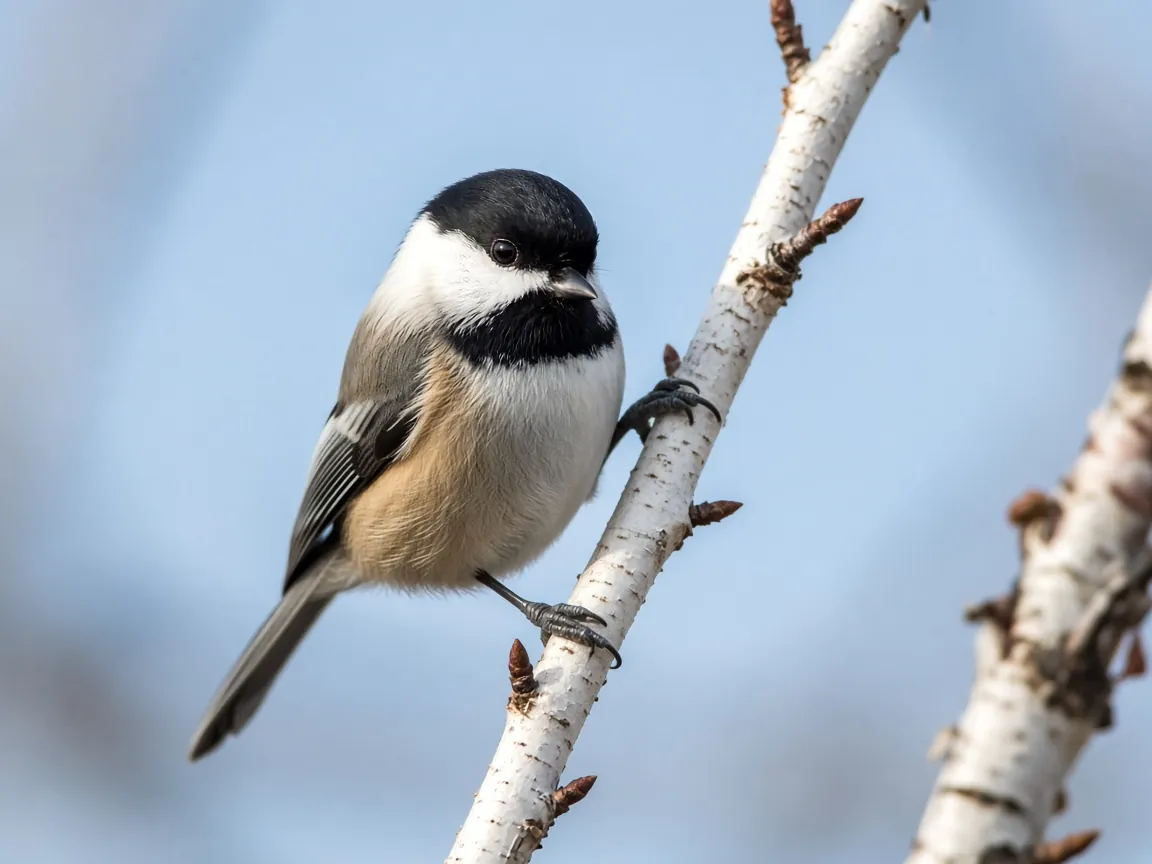
Chickadees are small, curious and constantly busy, and they are often the first birds to find a new feeder. This guide covers the black-capped chickadee along with its southeastern look-alike, the Carolina chickadee, and how beginners can tell them apart honestly.
Quick identification
- Size: smaller than a sparrow.
- Shape: a round body, a large head, a short thin bill and a fairly long tail.
- Color pattern: a black cap and black bib, bright white cheeks, soft gray back and wings, and buff to whitish underparts.
- Sexes: males and females look alike.
Black-capped or Carolina?
The black-capped chickadee lives across the northern United States, Canada and Alaska, and into parts of the Rocky Mountains. The Carolina chickadee covers much of the Southeast. Where their ranges meet, they can hybridize, and the two look very similar.
General tendencies, which are not absolute rules:
- Black-capped often shows more white edging on the wing feathers and a slightly messier lower edge to the bib.
- Carolina often looks grayer on the wing, with a neater bib edge.
- Songs differ: black-capped usually sings a two-note "fee-bee"; Carolina usually sings a four-note "fee-bee-fee-bay."
For most beginners, location is the most reliable starting clue. In overlap zones, even experienced birders may record a bird simply as "chickadee species," and that is perfectly acceptable.
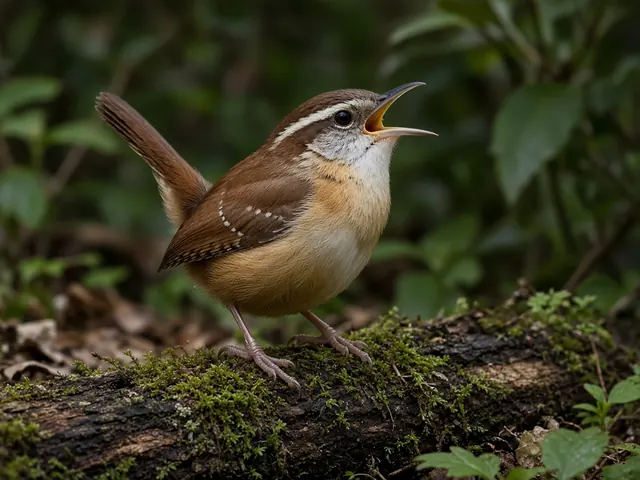
In the West, the mountain chickadee shows a white eyebrow stripe, and the chestnut-backed chickadee of the Pacific Northwest has a rich brown back.
Voice
The famous "chick-a-dee-dee-dee" call is used for contact and alarm. Research on black-capped chickadees has found that the number of "dee" notes can increase when a threatening predator is nearby, which other small birds may notice. Their clear "fee-bee" song is most common from late winter into spring.
Behavior
- Grab and go: chickadees usually take one seed at a time and fly to a nearby branch to hammer it open.
- Caching: they hide seeds and insects in bark crevices and are known for strong spatial memory.
- Acrobatics: they often hang upside down on twigs, cones and seed heads.
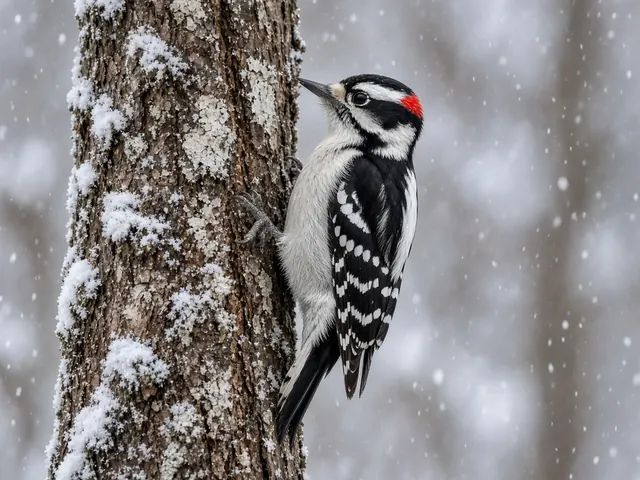
- Mixed flocks: in fall and winter, chickadees often lead small flocks that include titmice, nuthatches, kinglets and downy woodpeckers.
Food and feeders
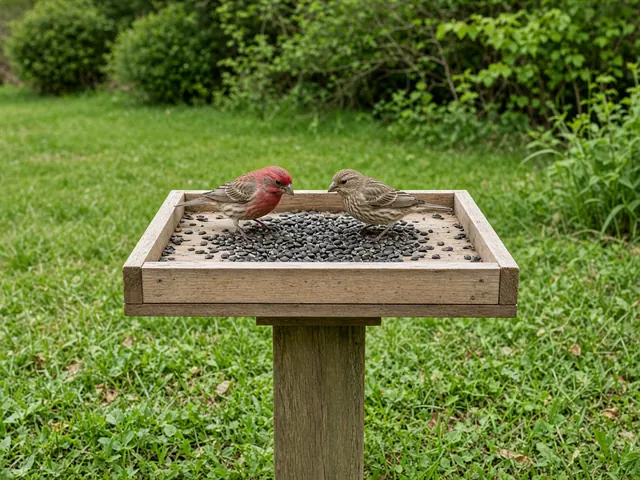
In the wild, chickadees eat many insects, spiders and their eggs, especially in summer, along with seeds and berries. At feeders they take black oil sunflower seed, hulled sunflower, suet and peanuts. Tube, hopper and small platform feeders all work.
Nesting
Chickadees nest in cavities: old woodpecker holes, natural hollows, or nest boxes. They may excavate soft, rotting wood themselves. Leaving dead snags where it is safe to do so, and offering a correctly sized nest box mounted away from easy predator access, can help. Monitor boxes from a respectful distance during nesting season.
Helping chickadees
- Plant native trees and shrubs that host caterpillars, which chickadees feed to their young; see native plants for birds.
- Keep feeders clean; see feeder hygiene.
- Reduce pesticide use, which reduces the insects chickadees depend on.
- Keep cats indoors; see cats and backyard birds.
Common mistakes
- Insisting on black-capped versus Carolina in an overlap zone without strong evidence.
- Confusing chickadees with the black-and-white nuthatch, which has no black bib and creeps along trunks.
- Assuming the "fee-bee" song is a phoebe; eastern phoebes say a raspier "fee-bree."
Chickadee checklist
- Smaller than a sparrow, round and big-headed
- Black cap and bib with white cheeks
- Gray back and wings
- Takes one seed and flies off
- "Chick-a-dee-dee-dee" call
- Location checked against a range map
Use the ID Helper to compare small black-and-white birds, then confirm with a field guide.
Questions beginners ask
Why do chickadees take one seed and leave?
They usually fly to a perch to open the seed safely, or cache it for later. This grab-and-go habit means a single chickadee can make dozens of trips in a short time, so it may look like there are more birds than there really are.
Will chickadees use a nest box?
Often, yes, if it is the right size and placed in suitable habitat. Many people add a little wood shavings inside, because chickadees like to excavate. Follow guidance from reputable sources such as NestWatch from the Cornell Lab for box dimensions and placement.
Why are there more chickadees in winter?
They join mixed flocks and roam more widely in search of food, so you may see several at once. Feeders and nearby cover make your yard a regular stop on their route.
Do chickadees remember where they hide food?
Research has shown chickadees have strong spatial memory and can relocate many caches, which helps them survive winter.
Helpful public resources
Links go to independent organizations. BackyardBirdAtlas is not affiliated with them.
Educational information only. Bird ranges and timing vary by region. For uncertain identifications, check a trusted field guide or ask local birding experts. For injured or sick birds, contact a licensed wildlife rehabilitator. See our disclaimer.