Keeping Cats and Backyard Birds Safe
Outdoor cats, including well-fed pets, are a major threat to birds in the United States. If you enjoy both cats and birds, the most effective step is keeping cats indoors or giving them safe, enclosed outdoor time. This guide explains practical, kind ways to protect both.
Why cats and birds don't mix
Cats are natural hunters, and hunting instinct does not depend on hunger. Even a well-fed pet may stalk and catch birds, especially ground-feeding species and young birds just out of the nest. Scientific studies estimate that free-roaming cats kill well over a billion birds each year in the United States, making cats one of the largest human-related causes of bird deaths.
Being caught by a cat is often fatal for a bird even when it seems to escape, because cat scratches and bites can cause serious infections. That is one more reason to call a licensed wildlife rehabilitator, rather than trying home care, if a cat catches a bird.
Indoor cats can be happy cats
Keeping cats indoors also protects them from traffic, predators, fights and diseases. Many veterinarians and animal welfare organizations support keeping cats indoors or giving them supervised outdoor time. To keep an indoor cat content:
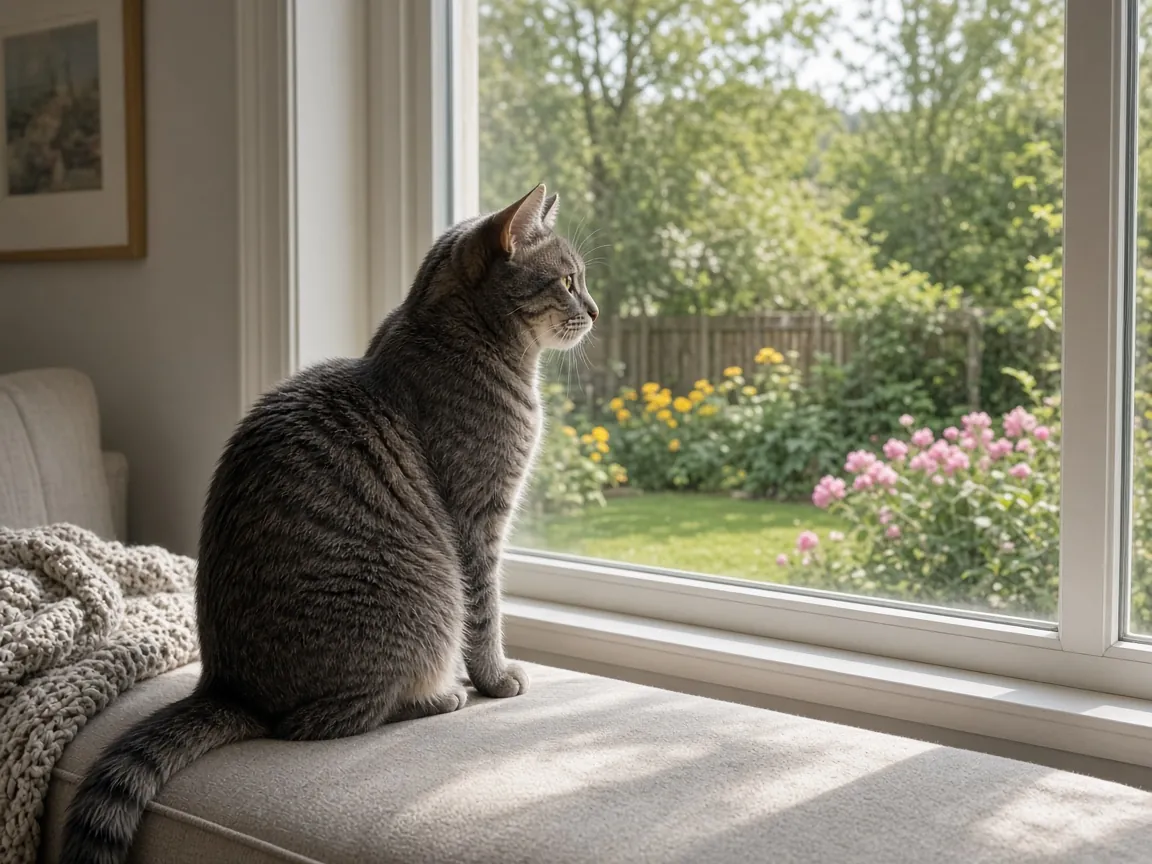
- Offer window perches with a view, ideally of a bird-friendly yard.
- Provide climbing trees, shelves and hiding spots.
- Play daily with wand toys that mimic hunting.
- Use puzzle feeders to make mealtimes more engaging.
For individual health or behavior questions, talk with your veterinarian.
Safe outdoor time
- Catios: enclosed patios or window boxes let cats enjoy fresh air without access to birds.
- Harness and leash: some cats adapt well to supervised walks.
- Enclosed yards: specialized fencing systems can contain some cats; check carefully for gaps.
Bells on collars are sometimes suggested, but studies show mixed results, and many birds, especially fledglings, cannot react fast enough. Bells are not a substitute for keeping cats contained.
Yard setup that helps
- Feeder placement: place feeders where birds can see an approaching animal, with shrubs for escape several feet away rather than directly beside the feeder.
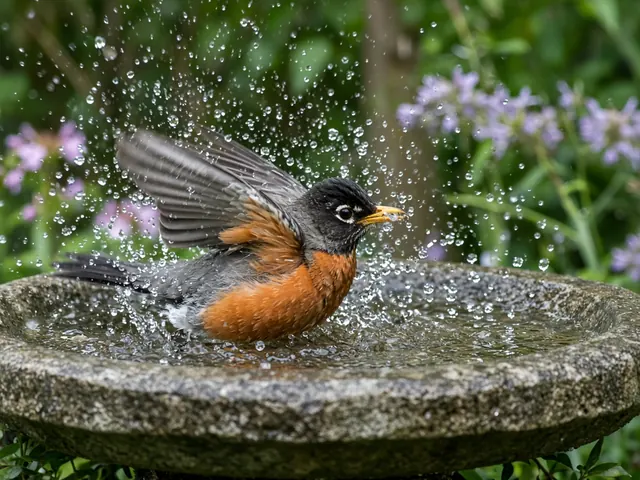
- Birdbaths: pedestal baths in open areas are safer than ground baths next to dense cover.
- Nest boxes: mount on poles with predator guards rather than on fences or trees that cats can climb.
- Nesting season: be especially careful in spring and summer, when fledglings spend time on the ground.
Neighborhood and stray cats
Cats that are not yours can be a sensitive topic. Approaches that are both humane and respectful include:
- Talking kindly with neighbors and sharing information about cats and birds.
- Using humane deterrents, such as motion-activated sprinklers, in garden areas.
- Contacting your local animal control or humane society for guidance on strays.
Never use poisons, traps that harm animals, or anything that could injure cats or wildlife. Local laws about cats vary, so check with local authorities before taking any action beyond your own property.
If a cat catches a bird
- Keep the cat indoors and away from the bird.
- If safe, gently place the bird in a ventilated box in a quiet, dark place.
- Do not give food or water.
- Contact a licensed wildlife rehabilitator as soon as possible, even if the bird looks unhurt. The Animal Help Now directory can help you find wildlife help in the United States.
Common mistakes
- Assuming a well-fed cat will not hunt.
- Relying on a bell instead of containment.
- Putting a ground-level feeder or bath next to dense cover.
- Waiting to see whether a cat-caught bird "seems fine" before getting expert help.
Cat and bird safety checklist
- Cats indoors or in a catio or on a harness
- Indoor enrichment: perches, play and puzzles
- Feeders and baths with open sightlines
- Nest boxes on guarded poles
- Humane deterrents only
- Rehabilitator contact saved
See also native plants for birds and window collision prevention.
Questions beginners ask
Is it cruel to keep a cat indoors?
Many cats live long, healthy, happy lives indoors with enough enrichment. Ask your veterinarian for advice on your individual cat.
What is a catio?
A catio is an enclosed outdoor space for cats, ranging from a small window box to a large screened patio. It lets cats experience fresh air and sights without harming wildlife.
Do cats only catch sick or weak birds?
No. Cats catch healthy birds too, especially fledglings, ground feeders and birds distracted at feeders.
Should I stop feeding birds if neighborhood cats visit?
Consider moving feeders to a more open area, adding protection around feeding stations, and talking with neighbors. If cats keep ambushing birds at your feeder, pausing feeding may be the kindest option.
Helpful public resources
- Keeping Cats Indoors — American Bird Conservancy
- Threats to Birds — U.S. Fish & Wildlife Service
- Feeding Birds (feeders, foods, cleaning, placement) — Project FeederWatch
- Animal Help Now — find wildlife help in the U.S.
Links go to independent organizations. BackyardBirdAtlas is not affiliated with them.
Educational information only. Bird ranges and timing vary by region. For uncertain identifications, check a trusted field guide or ask local birding experts. For injured or sick birds, contact a licensed wildlife rehabilitator. See our disclaimer.