Preventing Bird Window Collisions at Home
Glass is one of the biggest human-related threats to birds in the United States. Birds see reflections of sky and trees, or see straight through glass to plants beyond, and fly into it. The good news is that simple, inexpensive changes on your windows can greatly reduce collisions.
Why birds hit windows
Birds do not understand glass as a barrier. A window may reflect the sky, trees and shrubs so convincingly that it looks like open habitat. Corner windows or glass railings can create the illusion of a clear flight path through a building. Scientists estimate that collisions with glass kill hundreds of millions of birds in the United States each year, with homes and low buildings accounting for a large share.
The key idea: break up the reflection
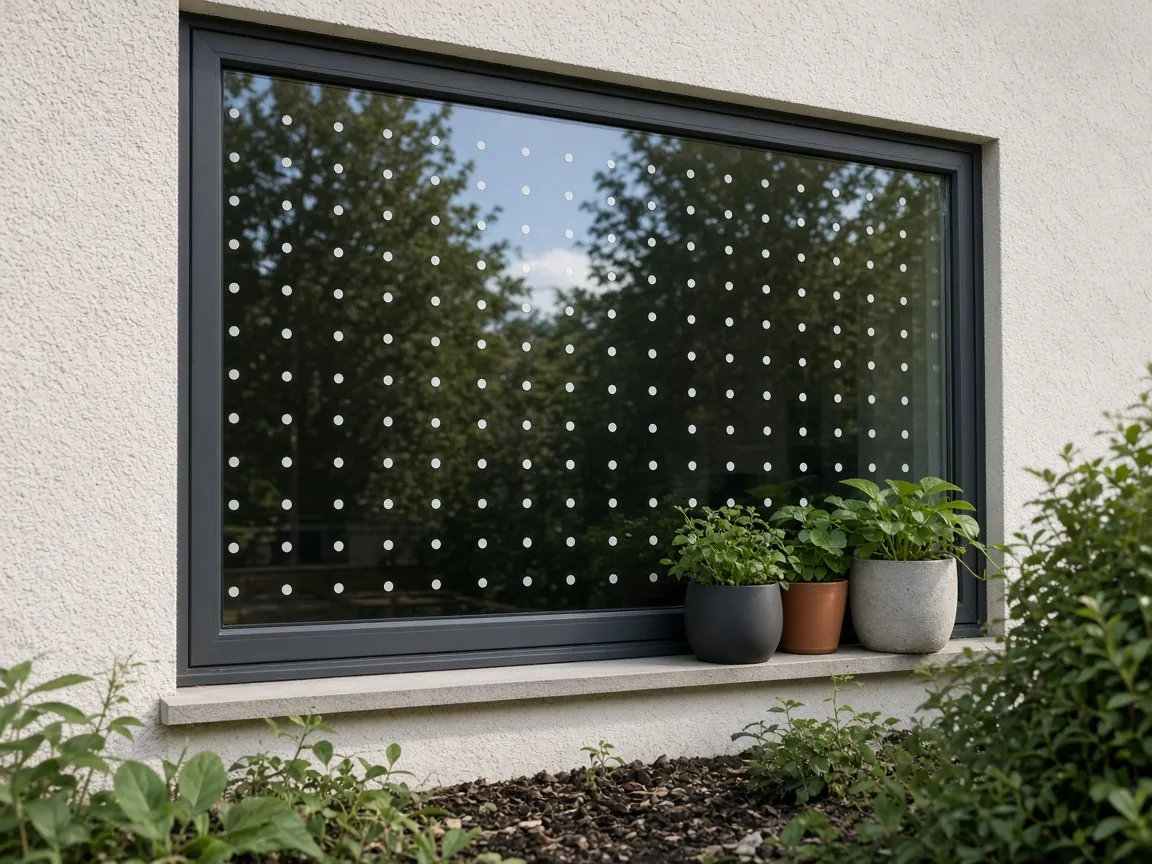
The most effective approach is to make glass visible to birds from the outside. Researchers and conservation groups, including the American Bird Conservancy, recommend markings spaced no more than about 2 inches apart horizontally and vertically, sometimes called the "2 by 2 rule." Small birds generally will not try to fly through gaps that narrow.
Markings must be on the outside surface of the glass to be effective, because reflections happen on the outer surface.
Practical options
- Dot or line patterns: commercial bird-safe window films or tapes with dots or lines spaced to the 2 by 2 guideline.
- Tempera paint or soap: draw patterns or grids on the outside of windows. Inexpensive and temporary, but needs reapplying.
- Exterior screens: insect screens on the outside reduce reflection and can soften impacts.
- Vertical cords: parachute-style cords hung outside a window, spaced closely, often called Zen curtains.
- Netting: taut netting a few inches in front of glass, so birds bounce off before hitting.
We do not recommend specific brands. Look for options described as meeting the 2 by 2 spacing guideline, and check that they suit your window type.
What does not work well
- A single hawk silhouette sticker. One decal leaves most of the window reflective; birds simply fly around it.
- Widely spaced decals. A few stickers far apart still leave gaps that look like open sky.
- Markings only on the inside of reflective glass.
Feeder and birdbath placement
Placement can reduce risk. A common recommendation is to put feeders and birdbaths either within about 3 feet of a window, so departing birds cannot build up much speed, or more than about 30 feet away, so birds are less likely to fly toward the house. Distances in between tend to be riskier.
Lighting at night
Many songbirds migrate at night, and bright lights can disorient them. Turning off unneeded outdoor lights and closing blinds at night, especially during spring and fall migration, can help. Many cities participate in "Lights Out" programs during migration seasons.
If a bird hits your window
A bird that hits a window may be stunned. If it is in danger from pets or people, you can gently place it in a small, ventilated cardboard box with a lid, in a quiet, dark, warm place away from pets and children. Do not give food or water. Check after a short time, outdoors, to see if it can fly away.
If the bird does not recover, is visibly injured, or seems unwell, contact a licensed wildlife rehabilitator for guidance. The Animal Help Now directory can help you find wildlife help in the United States. Do not try to treat injuries yourself; rehabilitators are trained and legally permitted to care for wild birds.
Find your problem windows
- Walk around your home and look at each window from outside, from a bird's eye level.
- Note windows that reflect trees or sky strongly.
- Note any windows where you can see through the house to the other side.
- Check for feather smudges or listen for thumps.
- Treat the worst windows first.
Common mistakes
- Relying on one or two decals.
- Applying patterns only inside the glass.
- Placing feeders 10 to 20 feet from a big window.
- Leaving bright lights on all night during migration.
Window safety checklist
- Problem windows identified from outside
- Markings on the outside, about 2 inches apart
- Screens, cords or netting where practical
- Feeders under 3 feet or over 30 feet from glass
- Unneeded outdoor lights off during migration
- Licensed rehabilitator contact saved for emergencies
Questions beginners ask
Do I need to treat every window?
Start with the windows that reflect the most vegetation or sky and any where collisions have happened. Treating the worst windows first often makes the biggest difference.
Will markings block my view?
Well-spaced dots or thin lines are noticeable up close but often fade into the background when looking through the window. Many people find they get used to them quickly.
Are window collisions only a problem for tall buildings?
No. Homes and low-rise buildings account for a large share of collisions overall simply because there are so many of them.
Does UV decal tape work?
Some products rely on ultraviolet patterns that birds may see better than people. Research has shown mixed results, and visible patterns following the 2 by 2 guideline are generally considered more reliable.
Helpful public resources
- Preventing Glass Collisions — American Bird Conservancy
- Threats to Birds — U.S. Fish & Wildlife Service
- Feeding Birds (feeders, foods, cleaning, placement) — Project FeederWatch
- Animal Help Now — find wildlife help in the U.S.
Links go to independent organizations. BackyardBirdAtlas is not affiliated with them.
Educational information only. Bird ranges and timing vary by region. For uncertain identifications, check a trusted field guide or ask local birding experts. For injured or sick birds, contact a licensed wildlife rehabilitator. See our disclaimer.