How to Clean a Birdbath
A birdbath can quickly collect algae, droppings, leaves and bacteria. Cleaning it regularly keeps water inviting and reduces the chance of spreading disease. Here is a simple, safe routine that takes only a few minutes.
How often to clean
- Change water: every couple of days, and daily in heat waves or busy periods.
- Light scrub: at each water change if you can, with a brush and plain water.
- Deeper clean: about weekly or whenever you see slime, algae or droppings building up.
Changing water at least twice a week also helps prevent mosquitoes, which usually need about a week in standing water to develop.
What you need
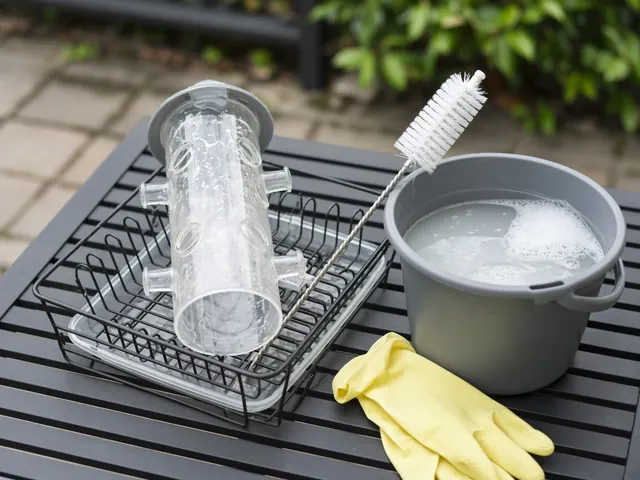
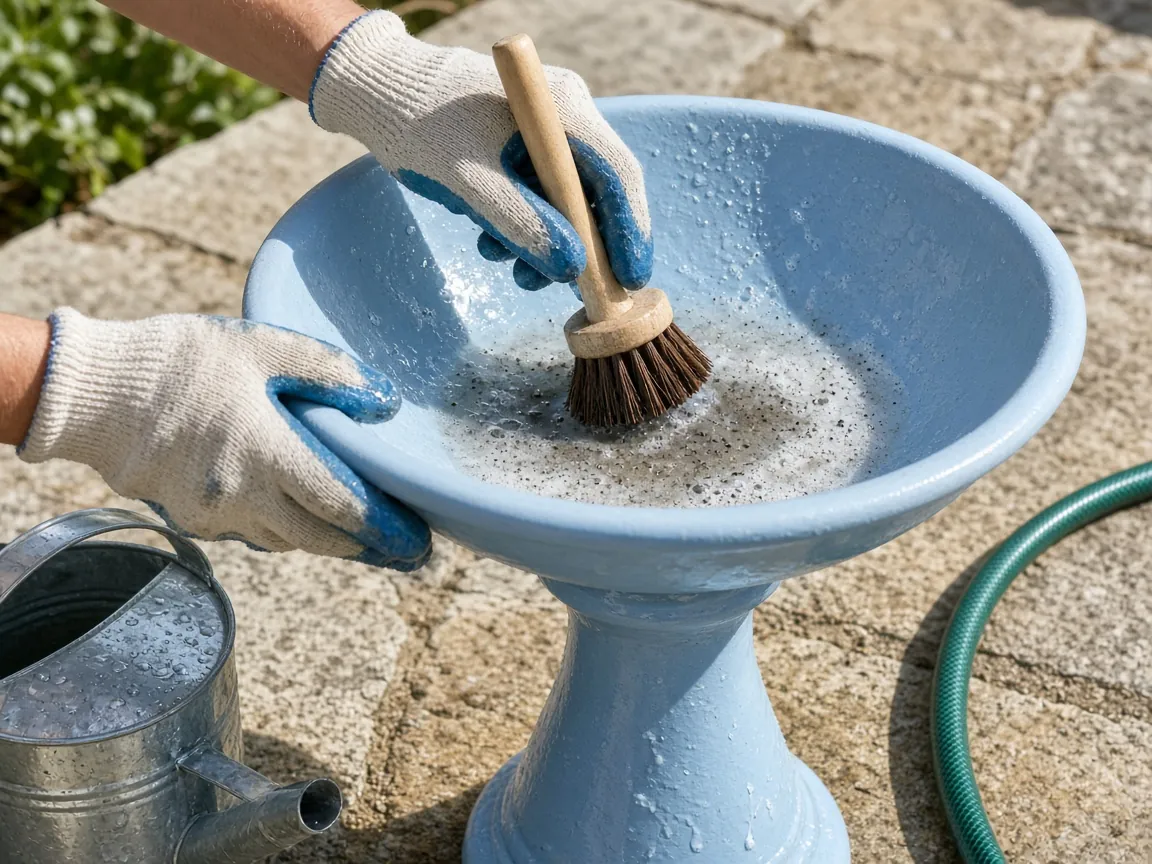
- Gloves
- A stiff brush reserved only for the birdbath
- A hose or watering can with clean water
- Optional: white vinegar, or a diluted bleach solution if appropriate for your bath
Step-by-step routine
- Empty the old water, away from vegetable gardens and pet areas.
- Scrub the bowl with your brush and clean water to loosen algae and residue.
- For a deeper clean, many sources suggest a solution of about one part white vinegar to nine parts water, or one part household bleach to nine parts water for disinfection. Scrub, then let it sit briefly.
- Rinse thoroughly, several times, until there is no smell of vinegar or bleach.
- Let it dry in the sun if you can; sunlight helps.
- Refill with fresh water about 1 to 2 inches deep.
- Wash your hands afterward.
Never mix bleach with vinegar or other cleaners; that can release harmful gases. Check your birdbath's care instructions, since some materials can be damaged by certain cleaners.
Preventing buildup
- Partial shade slows algae growth.
- Keep the bath away from feeders so seed and droppings do not fall in.
- Remove leaves and debris when you see them.
- Moving water from a small dripper or fountain can slow stagnation, but still needs cleaning.
Products to avoid
- Algaecides or "pond" chemicals not intended for birdbaths.
- Soap residue left in the bowl.
- Dyes, oils or scented additives.
- Copper pennies and other home remedies with uncertain safety.
Cleaning during disease outbreaks
If you see sick birds or your state wildlife agency reports a local outbreak, empty and disinfect birdbaths and feeders and consider taking them down for a while so birds disperse. If a bird appears injured or ill, contact a licensed wildlife rehabilitator rather than trying to treat it yourself. See our feeder hygiene guide for more.
Seasonal notes
- Summer: clean more often; heat speeds up algae and bacteria.
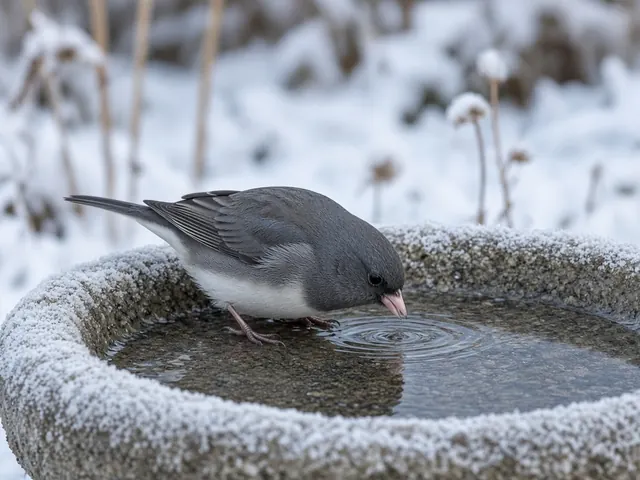
- Winter: keep cleaning even when it is cold; check freeze-safety of your basin. See winter water.
- Spring and fall: migrating birds may increase visits; keep water especially fresh.
Common mistakes
- Only topping up water instead of replacing it.
- Using the same brush for dishes and the birdbath.
- Not rinsing thoroughly after using vinegar or bleach.
- Waiting until the water turns green.
Birdbath cleaning checklist
- Water changed every two to three days
- Dedicated brush and gloves
- Scrub, rinse, and refill fresh
- Weekly deeper clean with careful rinsing
- No additives in the water
- Bath placed away from feeders, partly shaded
New to birdbaths? Start with birdbath basics for beginners.
Questions beginners ask
Is algae harmful?
A little green film is common, but heavy algae and slime make water less inviting and can harbor bacteria. Regular scrubbing keeps it under control.
Can I let the bath dry out between uses?
Yes. Drying in the sun after cleaning helps. Just refill it with fresh water afterward so birds keep a reliable source.
Does cleaning frighten birds away?
Birds may avoid the bath briefly while you work, but they return quickly. Clean early or late in the day if you want to minimize disruption.
What about a birdbath with a fountain pump?
Unplug the pump before cleaning, clean the pump intake and tubing according to the manufacturer's instructions, and never let a pump run dry.
Helpful public resources
- Feeding Birds (feeders, foods, cleaning, placement) — Project FeederWatch
- Animal Help Now — find wildlife help in the U.S.
Links go to independent organizations. BackyardBirdAtlas is not affiliated with them.
Educational information only. Bird ranges and timing vary by region. For uncertain identifications, check a trusted field guide or ask local birding experts. For injured or sick birds, contact a licensed wildlife rehabilitator. See our disclaimer.