How to Identify Backyard Birds: A Simple Beginner Routine
Most backyard birds can be identified with a short, repeatable routine: notice size and shape first, then color pattern, then behavior and place. This guide walks through that routine so a quick glimpse out the window turns into a confident, or at least honest, identification.
Why a routine beats a single clue
Beginners often jump straight to color. "It was brown" or "it had red on it" feels like the most obvious clue, but color is also the clue most changed by light, distance, season, age, and feather wear. A male house finch in shade and a female northern cardinal in bright sun can both look "brown with some red." A juvenile bird may look nothing like the adult in a field guide.
Experienced birders rarely rely on one feature. They stack several observations that point the same way. The Cornell Lab of Ornithology teaches four keys for this reason: size and shape, color pattern, behavior, and habitat. When three or four agree, you can feel reasonably sure. When they disagree, the honest answer is "not sure yet," and that is a perfectly good answer.
Step 1: Compare size to birds you already know
Exact measurements are hard to judge through a window. Comparison is easier. Pick a few reference birds that most US backyards share and use them as rulers:
- Smaller than a sparrow: chickadees, goldfinches, kinglets, hummingbirds.
- Sparrow-sized: house sparrows, song sparrows, house finches, juncos.
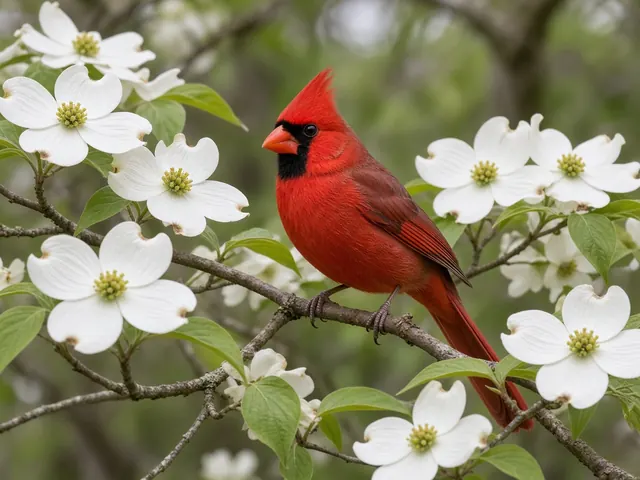
- Robin-sized: American robins, northern cardinals (slightly smaller), red-winged blackbirds.
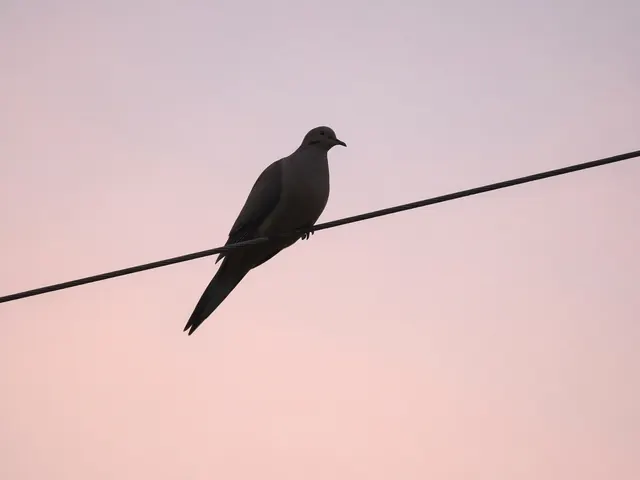
- Crow-sized or larger: American crows, many hawks, mourning doves are in between.
Size is easiest to judge when your bird sits next to something familiar: a feeder perch, a fence rail, or another bird. Our guide to size, shape and silhouette goes deeper on this step.
Step 2: Read the shape
Shape is surprisingly stable. Light changes colors; it does not change a bill. Look at:
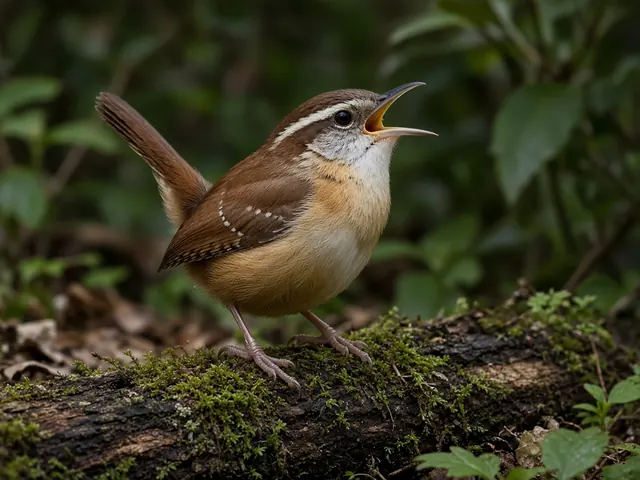
- Bill: thick and cone-shaped (seed eaters like cardinals and finches), thin and pointed (insect eaters like warblers and wrens), long and needle-like (hummingbirds), or chisel-like (woodpeckers).
- Tail: long or short, notched or rounded, held up (wrens) or pumped down (phoebes).
- Head: crested (blue jay, cardinal, tufted titmouse) or smooth.
- Body posture: upright on a perch, horizontal, or clinging vertically to bark.
Step 3: Note the color pattern, not just the color
Instead of "it was gray," try describing where the colors sit. Field marks are the specific patches and lines that separate similar species:
- A dark cap or bib (chickadees)
- Wing bars, the pale stripes across folded wings (goldfinches, many warblers)
- An eye line or eyebrow stripe (Carolina wren, white-throated sparrow)
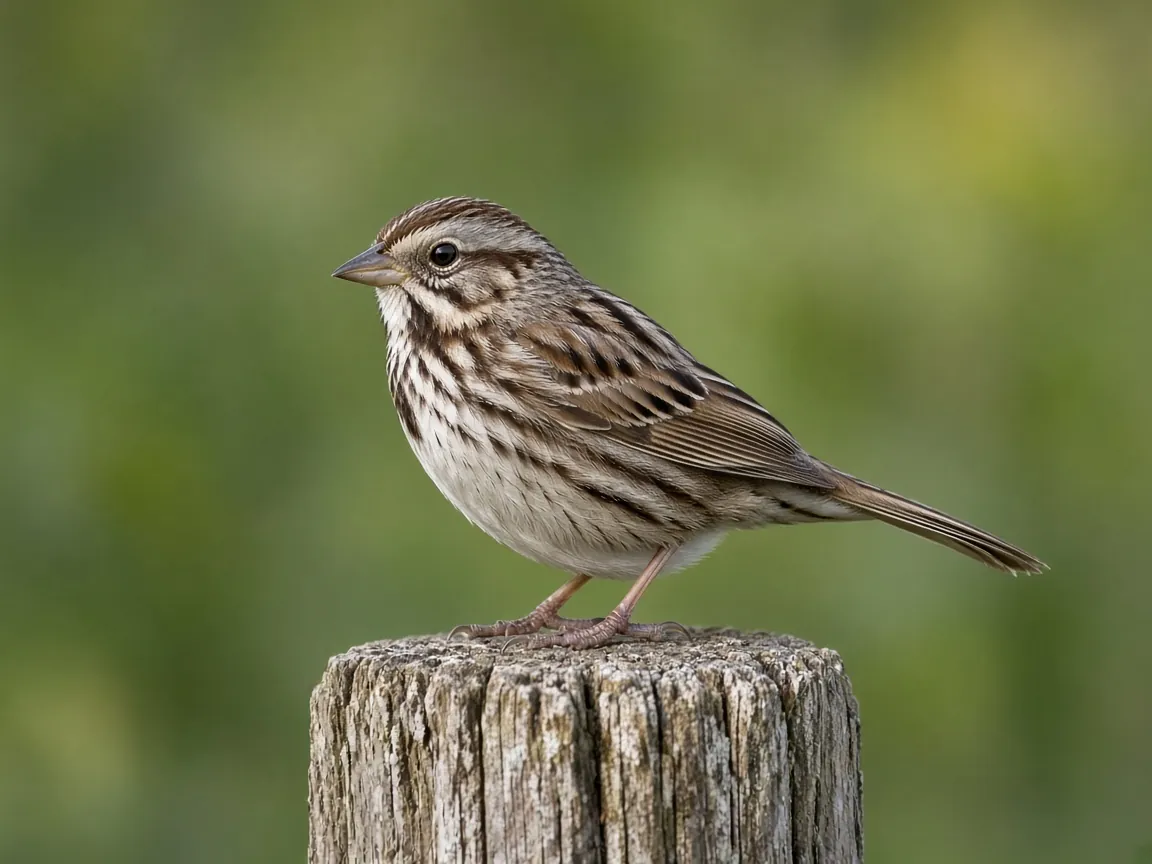
- Streaks versus a plain breast (song sparrow versus chipping sparrow)
- Outer tail feathers that flash white in flight (dark-eyed junco)
Write down two or three marks right away. Memory blends details within minutes, especially when several birds visit at once.
Step 4: Watch what the bird does
Behavior often settles an identification. White-breasted nuthatches creep headfirst down tree trunks. Woodpeckers hitch upward, bracing on stiff tails. Mourning doves walk calmly on the ground with a bobbing head. Hummingbirds hover. Juncos and many sparrows hop on the ground and scratch at leaf litter. A bird that flicks its tail, hangs upside down on a seed head, or grabs one seed and flies off to crack it elsewhere is giving you real information.
Step 5: Consider place, season and region
Where and when you see a bird narrows the list. A bird working the ground under shrubs is likely different from one high in a tree. Season matters too: American goldfinches look bright yellow in summer and drab olive in winter, and many species only pass through during spring and fall migration.
Region matters most of all. A black-capped chickadee is common in the northern United States, while the very similar Carolina chickadee covers much of the Southeast. Range maps in a field guide or a reputable app are the quickest reality check before you settle on a name.
A worked example
Imagine a small brown bird on your fence on an October morning. A quick routine might sound like this:
- Size: about sparrow-sized.
- Shape: short, cone-shaped bill; longish rounded tail.
- Pattern: heavy brown streaks on a pale breast, a darker central spot.
- Behavior: pumps its tail in flight and ducks into shrubs.
- Place: a brushy yard edge in much of the US.
Those clues together point toward a song sparrow, a widespread species. If you could not see the breast spot, though, several other streaky sparrows would still be possible, and it is fine to log the sighting as "sparrow species."
Common beginner mistakes
- Trusting one photo. A single angle can hide key marks or create false ones.
- Ignoring range. Before deciding on an unusual species, check whether it normally occurs in your area at that time of year.
- Forgetting age and sex differences. Females and juveniles of many species look quite different from adult males.
- Over-reading color in poor light. Backlit birds look dark; warm evening light adds orange tones.
- Feeling pressure to name every bird. "Unknown" is honest and still useful in your notes.
Beginner observation checklist
- Compare size with a sparrow, robin or crow
- Sketch or note bill shape and tail length
- Record two or three field marks and where they sit
- Describe what the bird was doing
- Note place, date, time and weather
- Check a range map before finalizing a name
Our free Backyard Bird ID Helper follows this same routine to build a short educational shortlist. It cannot confirm an identification, but it can suggest which pages of your field guide to check first.
When to ask for help
If you are unsure, compare with a trusted field guide, a reputable app such as the Cornell Lab's free Merlin Bird ID, or ask an experienced local birder, for example at a nature center or bird club walk. Most birders are happy to help a beginner, and a second pair of eyes is how everyone learns.
Questions beginners ask
How long does it take to learn common backyard birds?
Most people learn the regular visitors to their own yard within a few weeks of casual watching. Learning look-alikes, females, juveniles and migrants takes longer, often several seasons. Short, frequent sessions tend to work better than occasional long ones.
Do I need binoculars to start?
No. Many backyard birds can be identified from a window, especially at feeders. Binoculars help with distant or high birds, and a basic pair is enough for most beginners. Practice focusing on a fixed object such as a fence post before trying moving birds.
Should I photograph birds to identify them later?
Photos are useful, especially of several angles. Still, write quick notes about behavior and sound, because a photo cannot capture how a bird moved or called. Keep a respectful distance and never disturb nests for a picture.
Helpful public resources
Links go to independent organizations. BackyardBirdAtlas is not affiliated with them.
Educational information only. Bird ranges and timing vary by region. For uncertain identifications, check a trusted field guide or ask local birding experts. For injured or sick birds, contact a licensed wildlife rehabilitator. See our disclaimer.